

Thank you for joining us in Hyderabad.
The Healthcare Leadership Roundtable, hosted by LUMIQ and AWS.
To the CEOs, CFOs, COOs and technology leaders who gave us an evening: thank you. You brought the hard questions about where hospital revenue goes missing, for cash and insured patients alike, and honest answers about how a bill really gets made today. Here is what we took away, and how we can help from here.
What we discussed around the table
Hospitals have changed. The bill has not.
More specialties, procedures and consumables per admission. More packages, price lists, payer contracts and SOPs to bill by. More eyes on every line. Yet the bill is still put together by hand, line by line, from many people's notes.
Revenue slips both ways
Under-billed: a service given but not recorded, a consumable used but not entered, a lower package applied. Over-billed: an item entered twice, an implant opened but not used, a non-payable passed to the insurer. One loses revenue quietly; the other costs disputes, deductions and trust.
Most of the loss is decided before anyone pays
It starts at admission, with a missed charge, the wrong package or a pre-auth narrower than the treatment. It surfaces at discharge as a bill that differs from the quote, waits after discharge as dues and TPA queries, and ends after payment as discounts, write-offs and deductions nobody owns.
Insurers now read every line with AI
Insurers review bills against policy clauses, tariffs and package limits in minutes, and IRDAI now expects cashless decisions within an hour and discharge approval within three. There is less time than ever to fix a bill, so hospitals need the same rigour on their side.
Check at the source, not at the end
Auditing a sample of finished bills is a post-mortem. Checking every charge as it is entered finds the error while it can still be fixed, and each one becomes a rule so it does not come back next month. The measure that matters is the share of bills right the first time.
Pictures from the roundtable









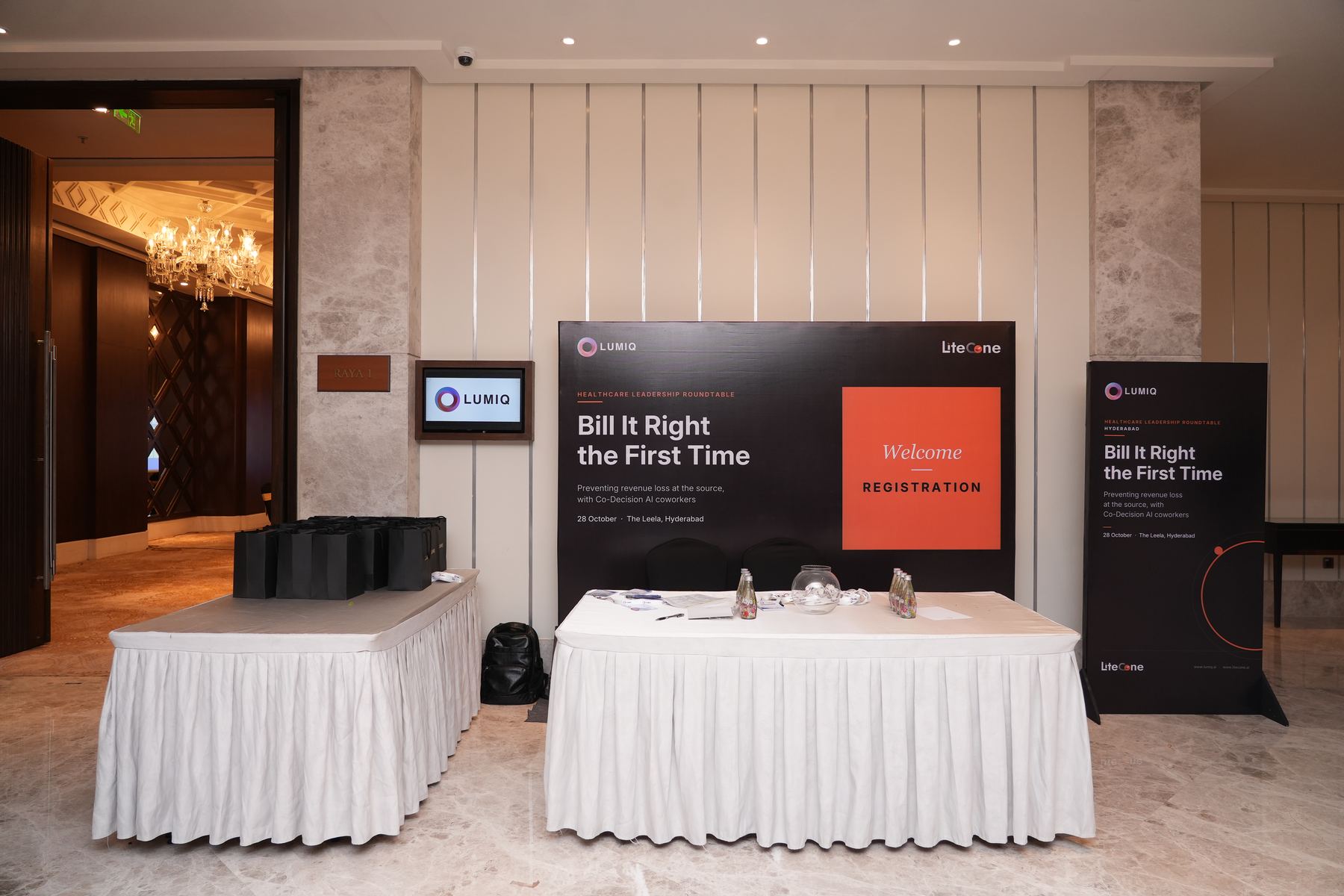






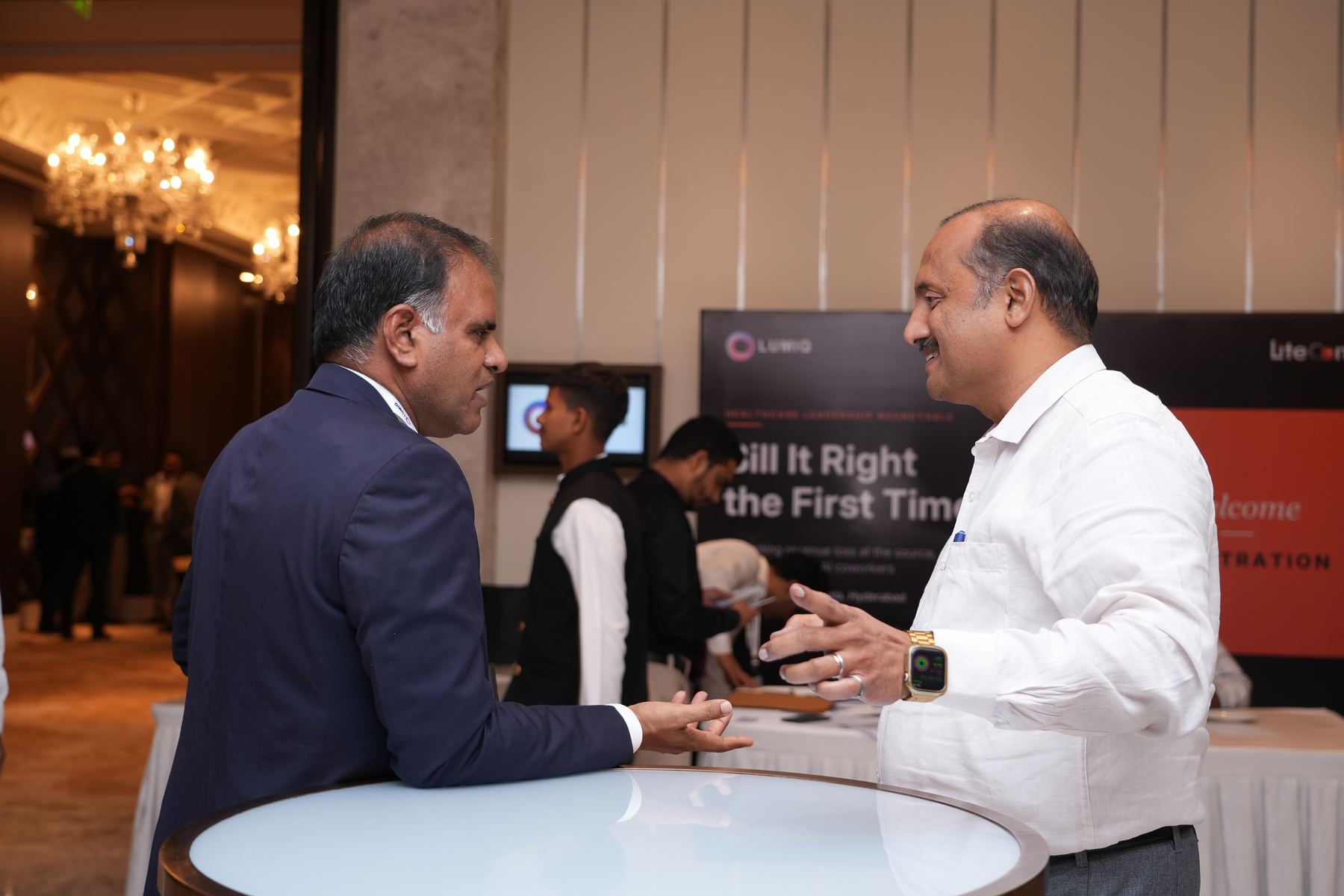





IRIS makes getting the bill right part of the process

IRIS checks the bill at three points, for cash and insured patients alike. It connects to the HIS and billing systems you already run. Nothing is replaced.
- Your team sets the rules
- You decide what it clears on its own
- Every decision cited and logged
- Runs in your own AWS
While there is still time to fix it
Charges, notes, packages and pre-auth scope checked as they are entered.
The full bill, once more
Against your tariff for cash patients, and payer rules for insured ones.
Losses become rules
Each deduction traced to its cause and fed back as a check at entry, so the process improves each month.
Start with your own number in two weeks
We measure leakage on your recent bills, cash and insured, then prove the value on live bills before IRIS moves into the flow.
- Weeks 1–2Measure. A benchmark on your recent bills: your leakage in rupees, by payer and by cause.
- Weeks 3–6Check every bill. IRIS checks live bills alongside your billing team.
- ThenRight at the source. IRIS moves into admission, notes, charge entry and pre-auth.
- Every monthA better process. Every deduction becomes a rule, reviewed with finance, operations and IT.
Measured on bills right the first time, revenue realised, discounts and deductions, days to cash, and escalations. Your data stays in your own AWS.
Questions? Write to team.marketing@lumiq.ai
Thank you. We will be in touch.
The LUMIQ team will email you within two working days to set up the next step.